The Kulera Landscape REDD+ Program in Malawi demonstrates how community associations can support effective conservation and livelihood initiatives at scale. The Nyika-Vwaza Association (NVA) and the Nkhotakota Wildlife Reserve Association (NAWIRA), through partnerships with the Department of National Parks and Wildlife (DNPW), Terra Global, and supported by protected area managers, generate and deploy carbon revenues that support both people and forests. NVA represents communities around Nyika National Park and Vwaza Marsh Wildlife Reserve, while NAWIRA represents households from four districts surrounding Nkhotakota Wildlife Reserve. Together, these associations represent over 300,000 people and work from the village level up to association trustees, ensuring that local voices guide decision-making. “Our mission is to coordinate conservation at the community level,” explained Eddings Shuga, NVA Chair. “With Kulera REDD+, we reinvest carbon revenues into activities that reduce deforestation in the parks and improve livelihoods through tree planting, livestock pass-on programs, and beekeeping.” Echoing this, Crosby Gome, NAWIRA Chairperson, noted that “the program has helped us build governance structures and implementation capacity that links communities directly to conservation.”
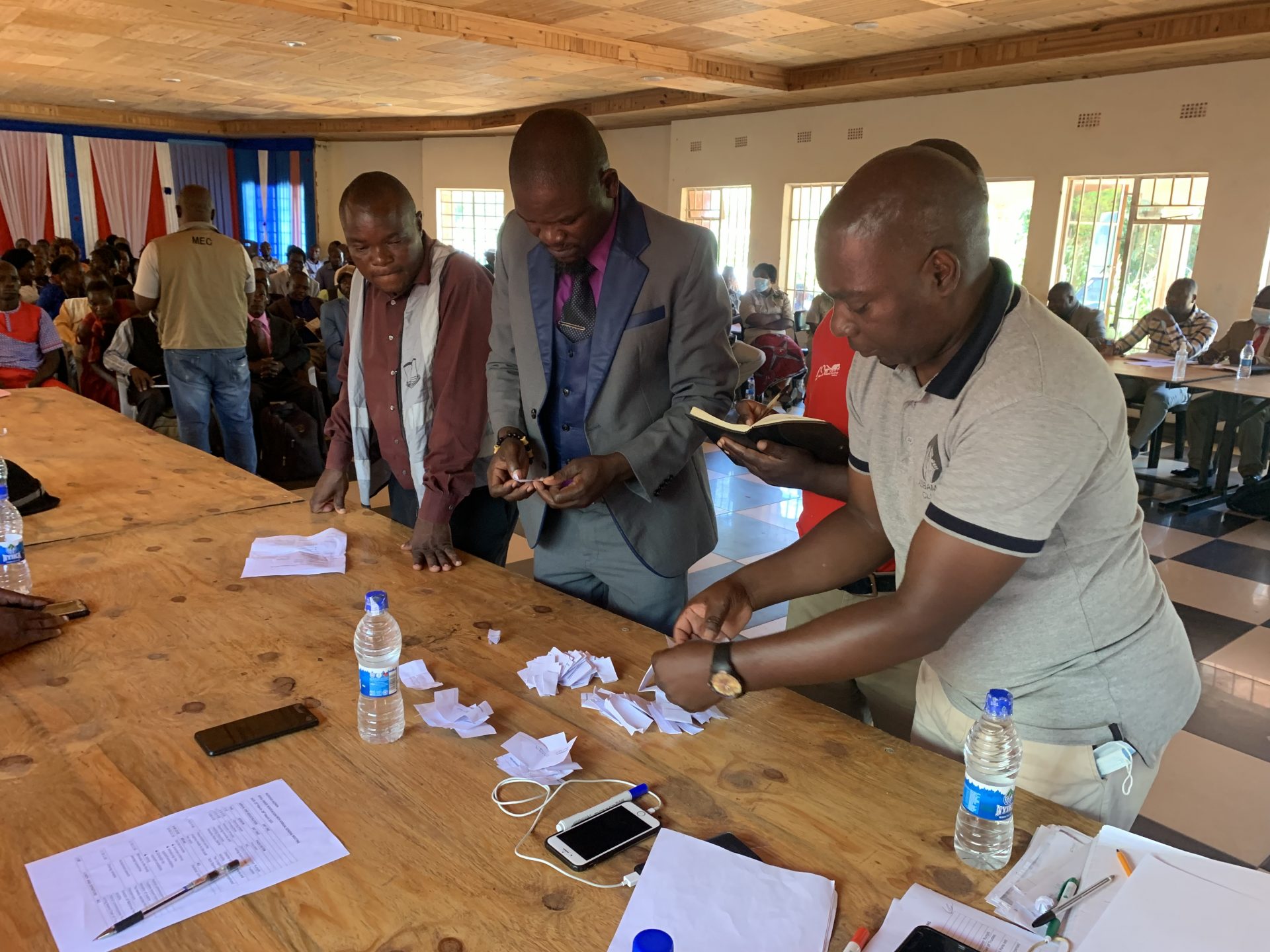
Working together on the Kulera REDD+ Program, a strong partnership between NVA and NAWIRA has been formed, with association chairs describing their relationship as one of brotherhood. They collaborate on workplans, budgets, monitoring, and problem-solving, and emphasized that benefits are shared transparently. “We sit at the same table, and always work together, from budgeting to resolving challenges,” said Eddings. Crosby added that joint planning ensures no partner is favored and that decisions are made collectively.
This collaboration has brought measurable results beyond the reduced deforestation in the protected areas. Seed programs have reached thousands of farmers: NVA distributed nearly 5,000 banana suckers, 3,500 kilograms of beans, and over 5,000 cassava bundles in one season, with germination rates above 90 percent even under harsh conditions. NAWIRA distributed more than 7,000 kilograms of cereals and legumes and 4,000 cassava bundles, strengthening food security across its districts. Livelihood diversification is equally robust, ranging from fish farming and beekeeping to livestock pass-on programs, with goats, chickens, and piglets supplied to households to provide food and income alternatives. In early 2025 alone, NVA planted more than 140,000 trees across Karonga, Hewe, and other zones, with survival confirmed despite droughts. NAWIRA achieved comparable scale, planting over 56,000 seedlings and distributing 2,000 fruit trees to households.
These initiatives go hand in hand with governance and stewardship. In April 2025, NVA reported 780 participants engaged in resource management meetings, with 305 women taking part. NAWIRA has overseen fair distribution of seeds and livestock, with women actively prioritized as beneficiaries in pass-on schemes. Such inclusion strengthens both household resilience and community governance, ensuring women’s voices and contributions are integral to conservation.
What is unique about the Kulera REDD+ Program is that, while the protection inside the parks is an important part of the Program’s success, the effectiveness of the work with the surrounding communities to address the drivers, agents, and underlying causes of deforestation is equally important. The strength supported by the unity of NVA and NAWIRA, built around a shared mission, has created increasing capacity and effectiveness of the associations to combat deforestation and build livelihoods. While Kulera has brought them together, it is NVA and NAWIRA’s continued collaboration and partnership that make the program successful, delivering lasting benefits for climate, community, and biodiversity across Northern and Central Malawi.